In today’s rapidly evolving biotech landscape, the efficient flow and integration of data across various systems and functions are crucial to the success of product development and commercialization. However, many organizations face significant challenges due to siloed data, complex system interfaces, and the difficulties inherent in transferring knowledge across the extended ecosystem of internal teams, contract organizations, and external partners.
This article explores the key barriers to data integration and tech transfer within biotech organizations and proposes solutions for overcoming these challenges through unified digital platforms, standardized data models, and seamless integrations that enable continuous digital threads, accelerate decision-making, and drive business value.
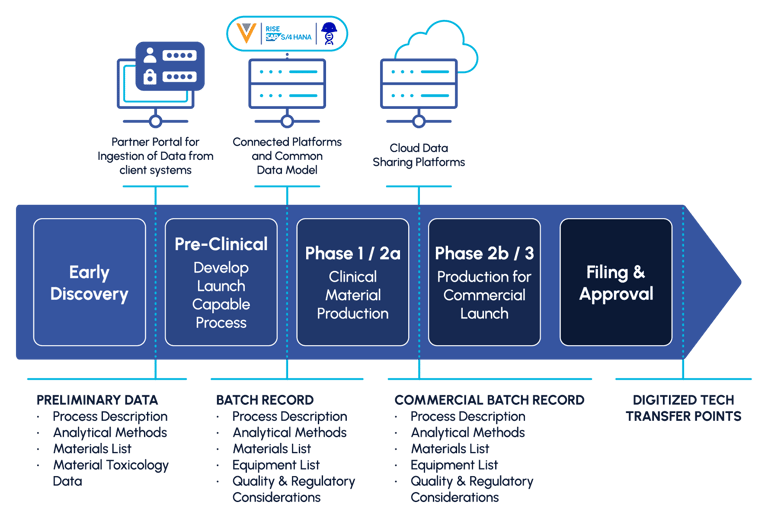
Figure 1. Landmark Bio’s End-to-End Product Lifecycle Management. From early discovery to preclinical, through clinical development, regulatory review, and approval, manufacturing, and quality control, the digital thread connects the entire therapeutic translation and industrialization phases.
Challenges in Data Integration and Tech Transfer
Siloed Data and Inefficient Data Utilization
One of the most significant barriers biotech companies face is the siloing of data assets by function, preventing seamless integration across research, development, clinical, and manufacturing stages. Data from instruments, assays, and other critical sources are often poorly leveraged, limiting the ability to create a continuous digital thread that supports decision-making across the enterprise.
In addition to the siloing of data, changes to processes and systems in biotech environments are typically incremental and require extensive validation before deployment. This incremental change approach results in slow adaptations and hampers the agility needed to drive innovation.
Interface Complexity and Integration Risk
Biotech organizations must also contend with the complexity of integrating multiple systems such as Electronic Lab Notebooks (ELN), Manufacturing Execution Systems (MES), Laboratory Information Management Systems (LIMS), and Lab Execution System (LES). These systems often don’t communicate well with one another, and traditional interfaces come with high implementation risk, often resulting in costly failures or inefficiencies.
Furthermore, integrating instrument data into data lakes or cloud environments requires substantial investment in both time and resources. Data must be carefully staged and transformed to ensure integrity, often requiring specialized tools and expertise.
Limitations of Traditional Systems
Traditional MES platforms rely on libraries of repeatable building blocks to create manufacturing recipes. However, in the fast-moving world of biotech, these recipes are rarely reused as services and products evolve constantly. This results in inefficiencies and a lack of flexibility in the production process, hindering the scaling of operations or the adaptation of new methodologies.
Barriers to Efficient Collaboration with External Partners
Working with external partners, such as Contract Development and Manufacturing Organizations (CDMOs) and Contract Manufacturing Organizations (CMOs) is often inefficient and challenging. Sponsors often partner closely with multiple organizations, but digital maturity between these parties is often mismatched. This disparity in capabilities makes tech transfers, both inbound (from sponsors to contract organizations) and outbound (from contract organizations to sponsors), difficult, inefficient, and error-prone.
In addition, the absence of established industry standards for data representation, coupled with a lack of robust integration solutions, leads to fragmented and inefficient interactions with external partners. Current sponsor-CDMO/CMO integration solutions are often not real-time, flexible, or validated for Good Manufacturing Practice (GxP), which is critical for regulatory compliance.
Challenges in Data Integration and Tech Transfer
To address these challenges, biotech organizations must adopt a solution-oriented approach that emphasizes integration, automation, and standardization. Below are some key strategies for overcoming the barriers to effective data management and tech transfer.
Unified Digital Platform for Seamless Integration
One of the most effective solutions to the integration problem is the deployment of a unified digital platform that can integrate ELN, LIMS, LES, MES, and other critical systems. By selecting vendor solutions that offer built-in integration, organizations can streamline data flows and ensure that all systems speak the same language.
The platform should be based on a common recipe/method data model, ensuring consistency across the lifecycle of biotech products. This allows for seamless data transfer from R&D to manufacturing and quality, while maintaining full data integrity. Moreover, integrating the ELN system with SDMS (Scientific Data Management System) can automate the ingestion and parsing of instrument data, retaining data integrity, and making it available for further use.
A key component of the solution approach is linking end-to-end product data from process development (PD) to manufacturing execution. This ensures that all data related to product development, manufacturing, quality control, and other areas are connected, versioned, and auditable, allowing for transparent decision-making.
ERP integrations can help replicate product data across the entire landscape — materials, assets, inventory movements, and quality events — ensuring that all systems reflect the same "version of truth." These connections allow for seamless transitions of data from one stage of development to the next, reducing manual data entry and minimizing errors.
For external tech transfer, the key is the adoption of common data standards for recipe and method models. This enables the conversion of digital datasets into structured, ISA 88/95-compliant recipes that can be used across different systems and technology solutions.
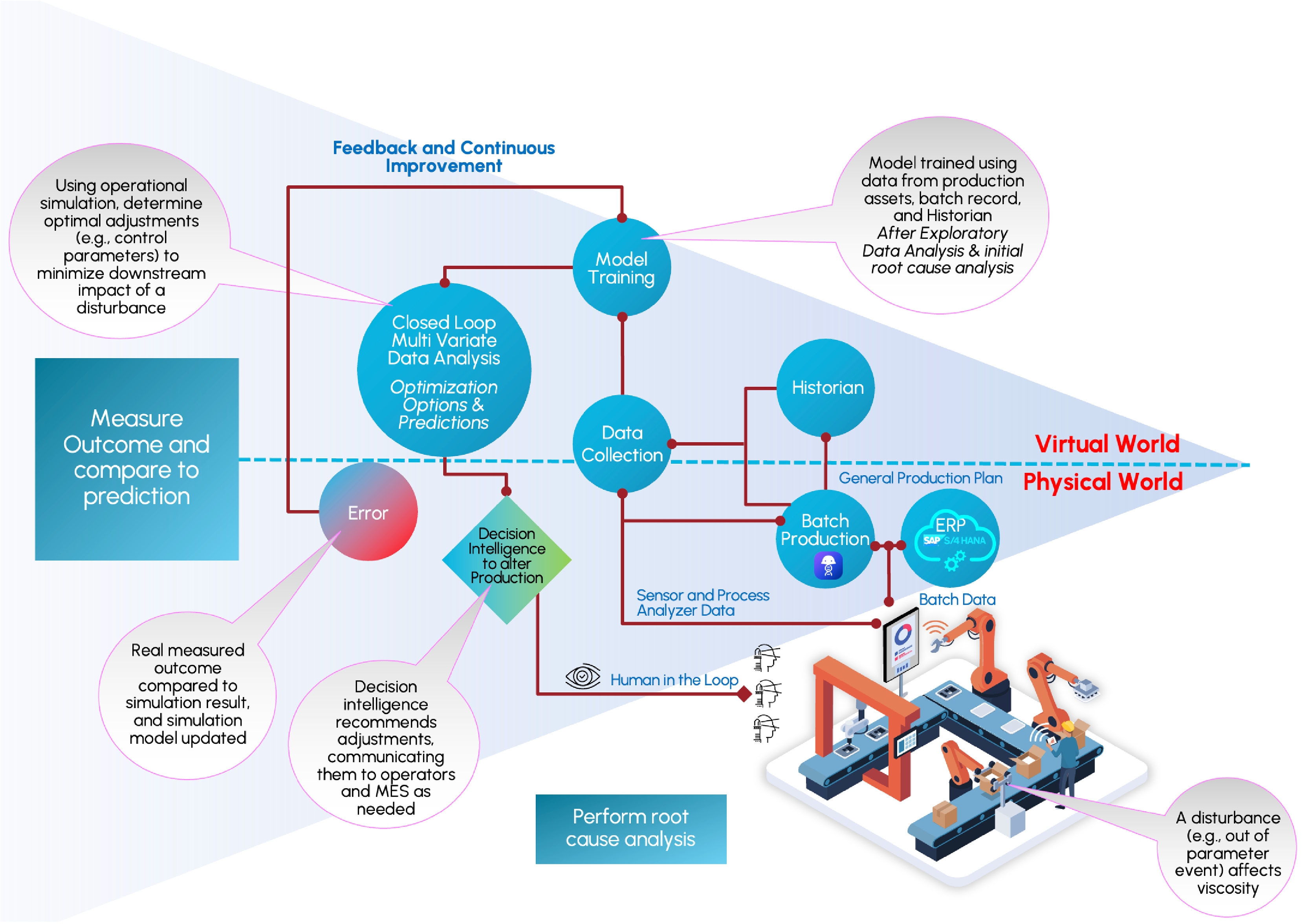
Figure 2. Future roadmap architecture for adaptive process control in manufacturing. Closed loop MVDA decision intelligence enables models with less variability and more history.
A secure, cloud-based collaborative platform is essential for data sharing between sponsors, CDMOs, and CMOs. Such platforms should support secure document submission, revisioning, and version control, providing a repository for process knowledge, quality control, and manufacturing processes. Automated tools, such as natural language processing and machine learning, can also help extract data from unstructured documents and convert it into structured datasets, ensuring the smooth transfer of knowledge and recipes between partners.
Conclusions: Building the Core Digital Foundation
In conclusion, optimizing data integration and tech transfer in the biotech industry requires a foundational shift towards a more connected and automated data ecosystem. By building a consistent IT/OT architecture and focusing on digital platform deployment, organizations can ensure that information flows seamlessly across R&D, clinical development, manufacturing, and external partners.
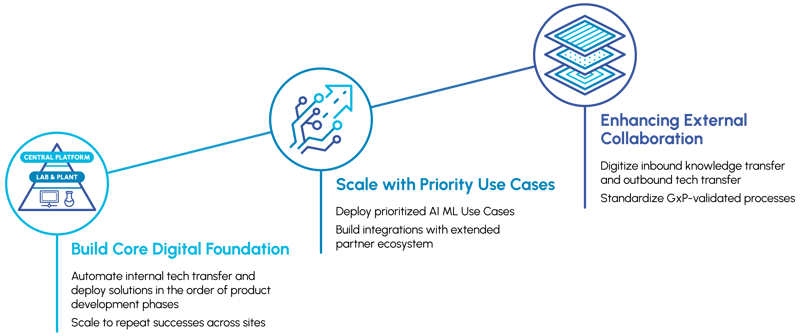
Figure 3. Building the right digital foundation sets the stage for all future successes throughout the drug development process.
Key steps include:
- Building Core Digital Foundations: Automate internal tech transfer by deploying a unified digital platform for tech transfer orchestration, aligned with product development phases. Replicate common ERP data across the landscape to ensure data consistency.
- Scaling with Priority Use Cases: Implement IT/OT convergence to acquire, aggregate, and contextualize data across formats. Deploy AI and machine learning solutions to enhance decision-making and process optimization.
- Enhancing External Collaboration: Digitize and standardize tech transfer processes between sponsors and contract organizations, enabling real-time, GxP-validated exchanges.
By building the right foundation, biotech organizations can unlock the full potential of their data, accelerating innovation, enhancing collaboration, and delivering better outcomes for patients. Realizing this goal requires an integrated digital ecosystem that democratizes data access across the enterprise, ensuring harmonized process data for every worker, interaction, and decision.
📩 Connect with us to learn how our capabilities can accelerate your program.
-1.png)
.png)